Home › Xenos Bestiary › Squigs
At a glance
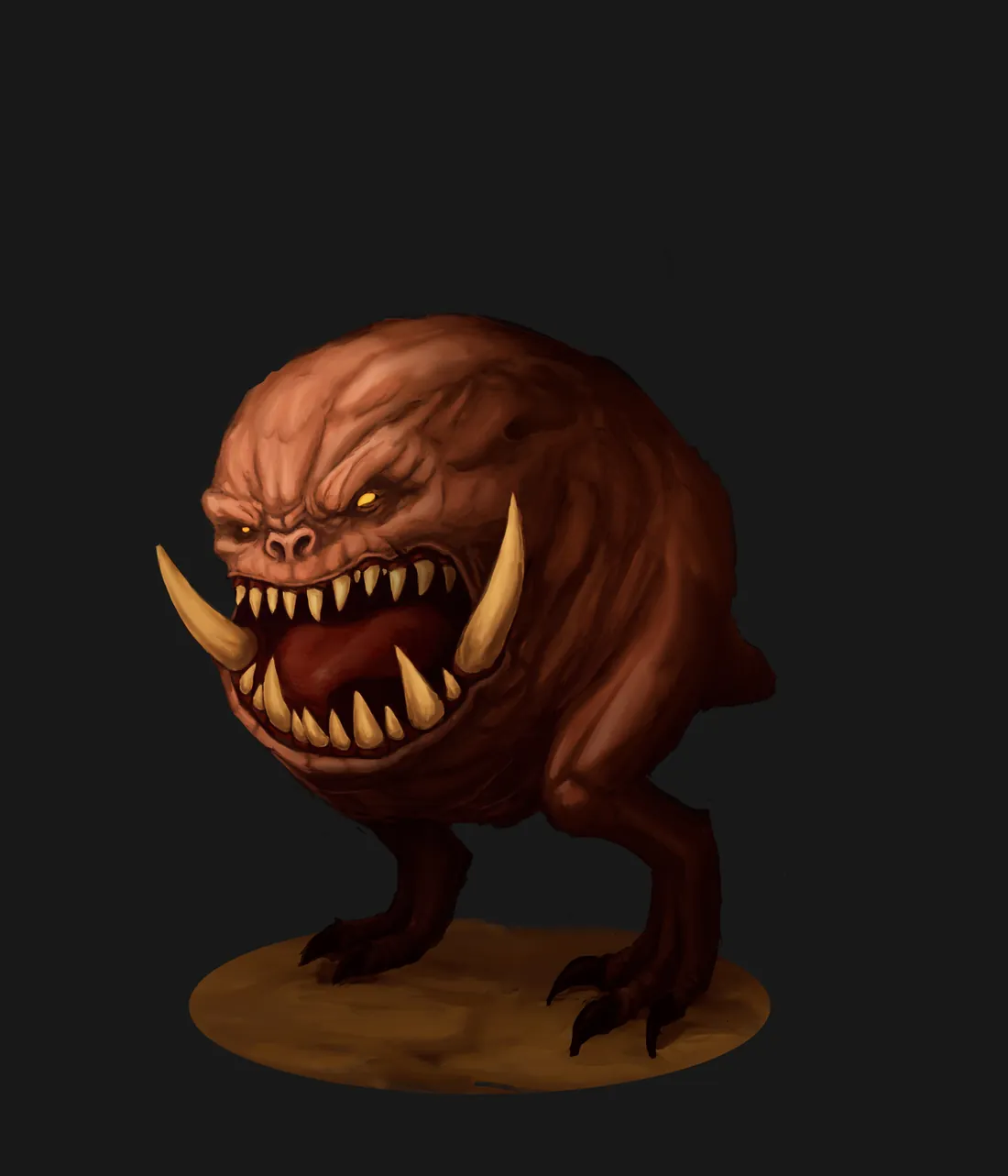
Squigs are the most common animals in the Ork ecosystem, and no Ork world is without them. Most are little more than a mouth on legs: round, rubbery bodies, huge jaws full of teeth, small eyes and a bottomless appetite. Beyond that basic pattern, squigs come in an almost unlimited range of shapes and sizes, from tiny hair squigs that sit on an Ork's head to the giant Squiggoths that carry gun towers into battle.
To the Orks, squigs are everything. They are food when roasted. They are drink when brewed. They are medicine in the hands of a Painboy, glue in the hands of a Mekboy and weapons when thrown at the enemy. Some are hunting animals, others guard dogs, others ammunition. An Ork camp is never quiet, because there is always a squig biting something.
To Imperial observers, squigs are vermin, pests and a sign that an Ork infestation has taken root. Where squigs appear, the full Ork ecosystem is establishing itself, and that means more Orks are on the way.
Biology
Like all orkoid creatures, squigs are fungal organisms that grow from spores. Orks constantly shed these spores, and when an Ork dies its body releases a burst of them. The spores grow underground into fungus, and from that fungus the whole Ork food chain emerges: fungi first, then squigs, then snotlings and gretchin, and finally Orks themselves. Squigs fill the role of livestock, pests and predators all at once, and they adapt to whatever environment they find.
The basic squig is a round creature with a mouth that takes up most of its body. Some have legs, some hop, some fly and some crawl. Their hides vary from smooth to spiny, and their colours are usually bright red, orange or purple, although many other colours exist. Their teeth are their most important feature. A squig's bite can take a finger off, and larger varieties can bite through limbs.
Common varieties
Ork society recognises many squig types, and new ones appear constantly. A few of the best known are:
- Attack squigs: aggressive, toothy beasts kept by Orks like guard dogs. They are often set loose ahead of a charge.
- Squig hounds: larger, leaner hunting squigs used by Runtherds to keep gretchin in line.
- Face-eater squigs: small, aggressive squigs prized as food and trophies, notorious for biting the face of anyone who handles them carelessly.
- Hair squigs: tiny squigs that cling to an Ork's scalp and look like hair. They are a fashion statement.
- Bile squigs: squigs that produce acidic or toxic fluids, used for everything from weapons to cleaning.
- Buzzer squigs: flying insect-like squigs that live in swarms and sting.
- Squighogs and Squigosaurs: huge riding squigs used by Beast Snagga clans as mounts.
- Bomb squigs: squigs strapped with explosives and sent running at enemy tanks.
Squigs in Ork life
Squigs are central to every part of Ork life. They are food first. Orks eat squig meat roasted, raw or stewed, and squig-based brews are a mainstay of Ork drinking. Squig hides are tanned for leather. Squig teeth are used as decorations and, among some tribes, as currency alongside Ork teeth.
Painboyz use squigs in surgery and medicine. Certain squigs are used to clean wounds, seal cuts or stitch flesh. A Painboy may use a "glue squig" to hold an Ork's wound shut while it heals. Others are used as anaesthetic, although Orks rarely bother. The infamous Mad Dok Grotsnik is known for experimental surgery, and squigs often play a part.
Mekboyz use squigs in machinery. Some squigs produce oils or acids useful in the workshop. Others are used as living components or simple animal power. Bomb squigs are a particularly Orky blend of beast and weapon.
Runtherds keep packs of squig hounds to drive gretchin into battle. The hounds bite stragglers and keep the grots moving forward.
Squigs as status
Orks treat squigs as signs of wealth and style. A Nob with a big, well-fed attack squig is showing off. A Warboss with a herd of riding squigs is a powerful Ork. A Painboy with exotic squigs is respected. Squigs are part of Ork culture as well as Ork survival.
Squigs at war
Squigs go to war with the Orks in many forms. Attack squigs and squig hounds charge ahead of the boyz. Bomb squigs run at tanks with explosives on their backs. Riding squigs carry Beast Snagga boyz into battle. Buzzer squig swarms cloud the battlefield. Squiggoths carry whole gun towers. Even a small squig can be thrown at an enemy if nothing better is available.
The Beast Snagga clans, who live closest to Ork wilderness traditions, are especially known for riding squigs. Squighog Boyz charge into battle on huge, snorting squigs with armoured hides and tusks, and Beastbosses ride even bigger beasts called Squigosaurs. These mounted Orks hit hard and fast, and their squigs bite and trample anything they reach.
Imperial forces facing Orks soon learn to watch for squigs. A wave of attack squigs can tie up a firing line just long enough for the boyz to arrive. A single bomb squig reaching a tank can destroy it. And a squig left behind after an Ork defeat can be the start of a new infestation.
Squigs and the Ork infestation cycle
Squigs are one of the main reasons Ork infestations are so hard to clear. When Orks die, their spores scatter. Those spores grow into fungus and squigs, and the squigs feed and spread further. Even when every Ork is gone, squigs and fungus can persist in caves, swamps and ruins. Given time, the spores produce gretchin and then Orks, and the cycle begins again.
Imperial doctrine therefore calls for burning Ork battlefields and destroying squig colonies wherever they are found. On worlds that suffered great Ork invasions, such as Armageddon, feral Ork populations have survived in jungles and wastelands for generations, and squigs are a constant part of that ecosystem.
Squig farming and herding
Many Ork camps keep squig pens next to the fungus beds, and gretchin do most of the work of feeding and cleaning them. The squigs are fed scraps, fungus, rubbish and the remains of anything the Orks have killed. When food runs short, the squigs eat each other, which the Orks see as a sensible way of sorting the strong from the weak. Pigdokz and herders among the Snakebites and Beast Snagga clans take squig breeding seriously, and a good herder can coax new varieties out of his stock simply by feeding them differently. Escaped squigs are a constant problem, and every Ork settlement is surrounded by feral squigs living off its rubbish heaps.
Dealing with squigs
- Burn everything: fire is the only reliable way to destroy squigs and their spores.
- Keep firing lines steady: attack squigs are meant to disrupt; discipline wins.
- Shoot bomb squigs early: they are small and erratic, so volume of fire matters.
- Search captured stores: crates, sacks and pits in Ork camps often hold live squigs.
Trivia
- Squigs are said to be the cornerstone of the Ork ecosystem: fungus feeds squigs, squigs feed Orks.
- Hair squigs are often described as a fashion choice rather than anything practical.
- Squig teeth are sometimes traded alongside Ork teeth, although Ork teeth remain the main currency.
- The same spore cycle that produces squigs also produces gretchin, snotlings and, eventually, more Orks.
- The word "squig" covers so many creatures that Imperial xenologists treat it as a category rather than a single species.

