Home › Weapons & Vehicles › Drukhari › Klaive & Demiklaives (Incubi Greatblade)
Lore & history
Across the blood-soaked battlefields of the forty-first millennium, few armaments command immediate recognition quite like the Klaive & Demiklaives (Incubi Greatblade). Associated foremost with the war-hosts of the Drukhari, this melee weapon embodies the tactical doctrine, metallurgical mastery, and merciless lethality of its creators. Whether borne into the heart of a boarding action by legendary champions such as Lelith Hesperax, Asdrubael Vect, The Visarch or issued to frontline formations including Incubi, Drukhari Archons, Wyches, Kabalite Warriors, Mandrakes, the Klaive & Demiklaives (Incubi Greatblade) has decided the fate of void-stations, hive spires, and fortress-monasteries from the Segmentum Solar to the Eastern Fringe.
In canonical records preserved within Codex: Drukhari (8th–10th Ed.); Phoenix Rising; Path of the Incubus (Andy Chambers), the Klaive & Demiklaives (Incubi Greatblade) is never treated as a mere tool of war, but as a sacred or terrifying extension of its wielder's martial creed. Every surviving pattern—most notably the Executioner's Demiklaives of Drazhar & Bloodstone-Core Klaive—carries centuries of battle-honours, kill-tallies, and artificer modifications etched directly into its casing and load-bearing assemblies. When unleashed at close or medium quarters, its signature report and unmistakable silhouette—defined by curved obsidian-hued two-handed power blade, broken spirit-stone Tormenter node in the crossguard, and counterweight pommel—serve both to rally allied formations and to shatter the morale of opposing infantry and armoured columns before the killing blow even lands.
Design, mechanism & battlefield effect
The internal engineering and battlefield operation of the Klaive & Demiklaives (Incubi Greatblade) rely upon an unforgiving marriage of exotic materials science and high-energy lethality. Constructed around curved obsidian-hued two-handed power blade, broken spirit-stone Tormenter node in the crossguard, and counterweight pommel, the weapon channels immense destructive potential into a focused point of impact or terminal salvo. Upon activation, primary power conduits or symbiotic feeder assemblies draw directly from high-capacity micro-reactors, backpack generator cells, or warp-attuned cores, priming the striking assembly within milliseconds.
At the moment of engagement, the Klaive & Demiklaives (Incubi Greatblade) bypasses conventional ceramite, plasteel, and chitinous carapace by attacking the structural integrity of the target's armour at the molecular or sub-atomic level. Standard defensive countermeasures—including refractor fields, storm shields, and reinforced bulkhead plating—rapidly buckle under sustained fire or repeated blows. Because of the extreme thermal, gravimetric, or kinetic stresses generated during operation, only heavily augmented warriors, battlesuits, or elite veterans of Incubi, Drukhari Archons, Wyches, Kabalite Warriors, Mandrakes possess the physical resilience and neural-link calibration required to wield the Klaive & Demiklaives (Incubi Greatblade) without suffering catastrophic feedback.
Patterns, variants & doctrine
Over ten thousand years of attritional warfare, the Klaive & Demiklaives (Incubi Greatblade) has diverged into numerous regional, forge-world, and relic sub-patterns, foremost among them the Executioner's Demiklaives of Drazhar & Bloodstone-Core Klaive. Master-crafted examples forged for commanders such as Lelith Hesperax, Asdrubael Vect, The Visarch incorporate bespoke targeting augurs, reinforced disruption coils, or ancient archaeotech components that elevate their armour-penetration and reliability far beyond standard munitorum or warband issue.
Specialist formations—particularly Incubi, Drukhari Archons, Wyches, Kabalite Warriors, Mandrakes—further adapt the Klaive & Demiklaives (Incubi Greatblade) to suit extreme combat environments, from zero-gravity Space Hulk boarding corridors to ash-choked siege trenches. These field variants trade bulk or ammunition capacity for overcharged output, twin-linked mounting arrays, or integrated secondary weapons, ensuring that no enemy fortification or monstrous bio-form remains impervious.
Across ten millennia of total war, the Klaive & Demiklaives (Incubi Greatblade) (Melee Weapon) has spawned numerous classified sub-patterns tailored to the operational theatres of the Drukhari. Foremost among these are the Executioner's Demiklaives of Drazhar & Bloodstone-Core Klaive, which modify the standard curved obsidian-hued two-handed power blade, broken spirit-stone Tormenter node in the crossguard, and counterweight pommel to maximise terminal damage against Terminator plate, Dreadnought sarcophagi, and super-heavy war-engines. Elite champions (Lelith Hesperax, Asdrubael Vect, The Visarch) and specialist squads (Incubi, Drukhari Archons, Wyches, Kabalite Warriors, Mandrakes) routinely pair these variants with advanced auspex targeters or psychic synchronization nodes.
Forge World Variations, Internal Mechanics & Artificer Visuals
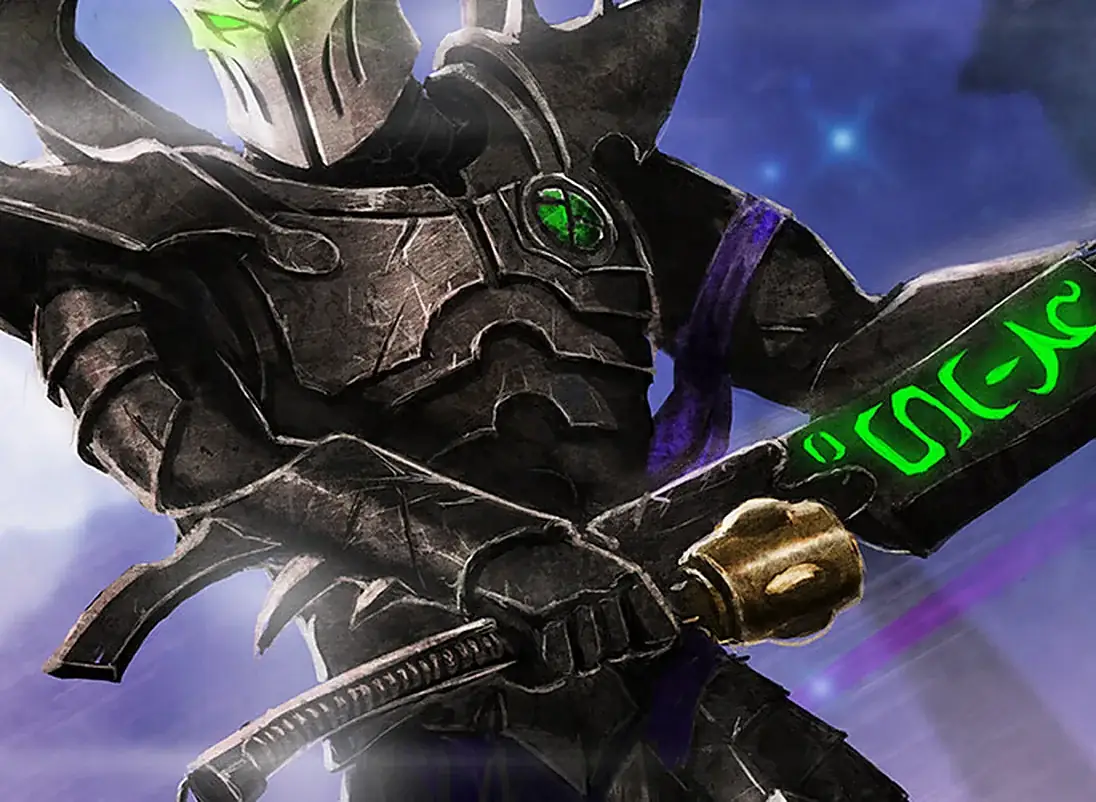
Within the sealed armouries, forge-fanes, and bio-crucibles that sustain the Drukhari, the fabrication and maintenance of the Klaive & Demiklaives (Incubi Greatblade) demand the highest tier of craft. Every visual and mechanical detail of the weapon—specifically its curved obsidian-hued two-handed power blade, broken spirit-stone Tormenter node in the crossguard, and counterweight pommel—is engineered to withstand extreme thermal, kinetic, and warp-borne stress. On the tabletop and in high-detail fan art, the Klaive & Demiklaives (Incubi Greatblade) is immediately identifiable by its distinctive profile (Executioner's Demiklaives of Drazhar & Bloodstone-Core Klaive), heavy weathering, and the unmistakable glow or mechanical menace of its active assembly when wielded by Incubi, Drukhari Archons, Wyches, Kabalite Warriors, Mandrakes.
Notable patterns & relic examples
- Executioner's Demiklaives of Drazhar & Bloodstone-Core Klaive: The premier canonical pattern of the Klaive & Demiklaives (Incubi Greatblade), renowned across the battlezones documented in Codex: Drukhari (8th–10th Ed.); Phoenix Rising; Path of the Incubus (Andy Chambers) for its unmatched lethality against heavy power armour and armoured vehicles.
- Artificer / Relic Loadouts of Lelith Hesperax: Custom-wrought exemplar of the Klaive & Demiklaives (Incubi Greatblade) featuring reinforced curved obsidian-hued two-handed power blade, broken spirit-stone Tormenter node in the crossguard, and counterweight pommel and centuries of recorded battlefield kills.
- Vanguard & Siege Issue (Incubi): Frontline configuration engineered for sustained high-intensity engagements, boarding actions, and bunker-clearing assaults.
- Master-Crafted Variant (Bloodstone-Core Klaive): Specialized sub-pattern prized by veteran cadres of the Drukhari for its superior armour-shearing output and resilience under fire.
Wielded & Fielded By
Characters (3)
 Lelith Hesperax · Succubus of the Cult of Strife
 Asdrubael Vect · Supreme Overlord of Commorragh
 The Visarch · Sword of Ynnead
Units (5)


Related weapons & vehicles
 Castellan Axe (Auramite Halberd & Bolter)
 Guardian Spear
 C'tan Phase Sword & Neural Shredder
 Eviscerator (Two-Handed Heavy Chainsword)
 Omnissian Axe (Cog-Toothed Power Halberd)
 Chainsword
 Crozius Arcanum (Winged Skull Power Maul)
 Force Stave & Nemesis Force Staff