Home › Worlds & Places › Fenris
At a glance
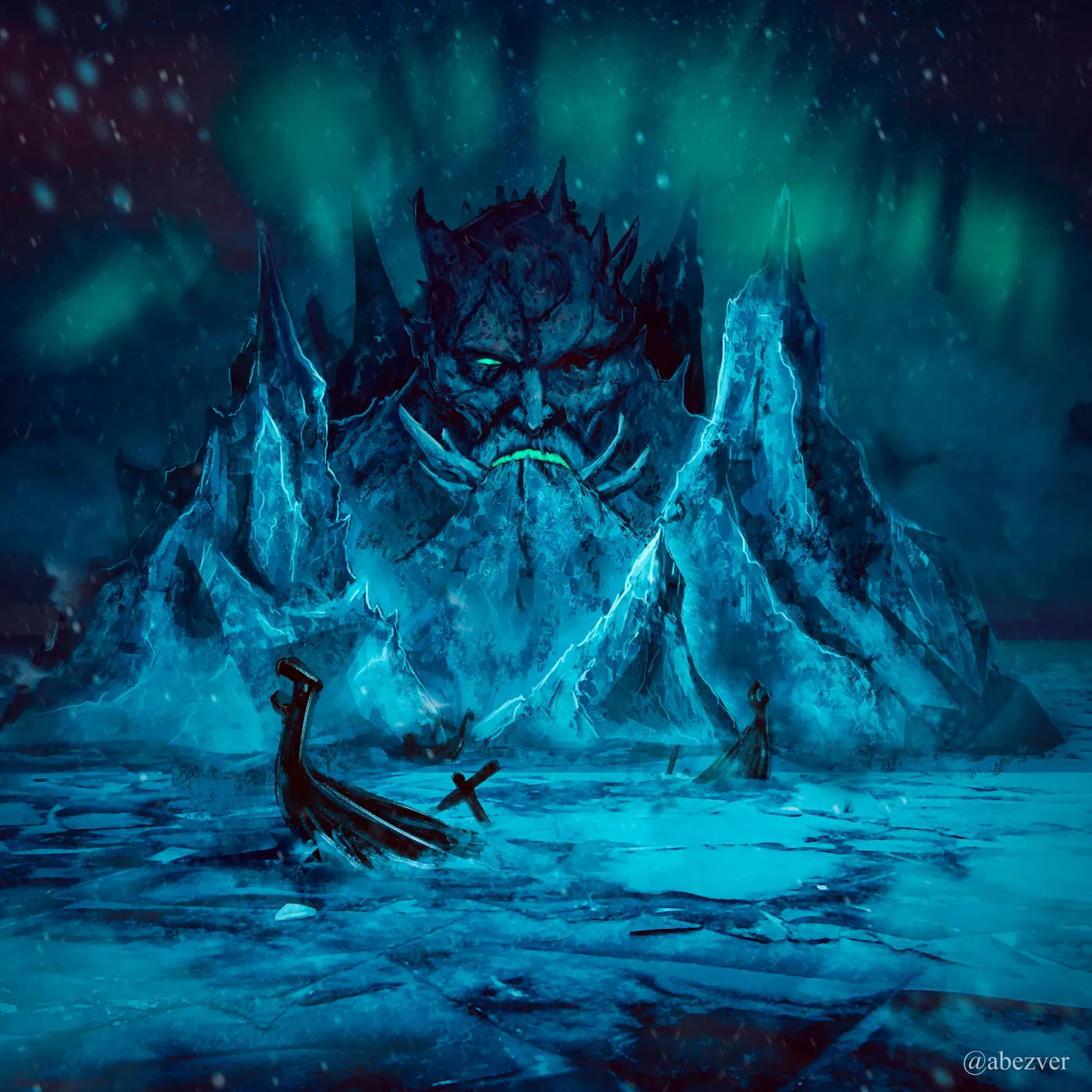
Fenris is a world that tries to kill everything that lives on it. It is a cold, storm-wracked planet of ice sheets, black oceans and volcanic islands, populated by beasts that hunt humans for food and by human tribes that survive through ferocity, cunning and endless raiding. It is also the homeworld of the Space Wolves, the Chapter founded by the Primarch Leman Russ, and for ten thousand years it has been one of the most fiercely defended worlds in the Imperium.
At the heart of Fenris rises the Fang, a mountain so tall that its peak pierces the upper atmosphere. Inside it lies the fortress-monastery of the Space Wolves, carved into the rock and filled with feasting halls, armouries, shrines and the tombs of fallen heroes. From the Fang, the Great Wolf rules his Chapter and keeps watch over the world that made them.
Fenris is not a gentle home, and the Space Wolves like it that way. Its tribes provide the Chapter's recruits, its storms and beasts provide their trials, and its harshness shapes the Wolves' character: proud, boisterous, loyal to their own and utterly merciless to their enemies. To the Wolves, Fenris is not a planet but a mother, and they guard it with a fury few foes have survived.
Geography & environment
Fenris has an extreme orbit that takes it far from its sun for most of its Great Year and close to it for a brief, terrible summer. During the long winter, the oceans freeze, glaciers grind across the land and storms of ice and snow blast the surface. As the planet approaches its sun, the ice melts, seas boil, volcanoes erupt and earthquakes shake the world apart. Islands rise from the sea and sink back beneath it; whole landmasses break apart and drift. Few places on Fenris are permanent, and the map changes with every Great Year.
The largest stable landmass is Asaheim, where the Fang stands. Asaheim is a land of mountains, ice fields and narrow valleys, and its peaks are among the few places on Fenris that do not move. Most of the rest of the world is ocean scattered with islands, some volcanic and some locked in ice, where the human tribes live. Life on these islands is precarious. When the seas rise or the volcanoes awaken, entire tribes can be wiped out in a single season.
The skies of Fenris are wild. Lightning storms rage for weeks. Ice storms can freeze a man in seconds. The aurora shimmers across the northern sky, and the Fenrisians see in it the spirits of their ancestors. The seas are dark and cold, and anything that falls into them is likely to be eaten before it drowns.
Beasts of Fenris
Fenris is home to some of the most dangerous predators in the Imperium. The Fenrisian wolves are huge, intelligent pack hunters, some the size of horses, and the greatest of them, the Thunderwolves, are larger still. The Space Wolves admire these beasts and often tame them as companions or battle-mounts. Wolf Lords and their champions ride Thunderwolves into battle in the Thunderwolf Cavalry.
In the seas live the Fenrisian kraken, colossal tentacled monsters that can pull longships beneath the waves and are said to fight each other in the depths with a violence that churns the surface. Sea serpents hunt the coasts. On land, ice trolls, giant bears and other beasts prey on anything that strays too far from the tribe. The Fenrisians tell stories of dragons too, great serpentine monsters of fire and ice that once ruled the world and now sleep beneath the mountains.
The Space Wolves treat the beasts of Fenris with respect. Many of their rites and traditions are built around hunting them, and an aspirant who survives a duel with a Fenrisian wolf or a sea serpent is honoured among his people. Pelts, teeth and claws of these creatures adorn Space Wolf armour, each one a trophy of a hunt and a sign of a warrior's courage.
History
Russ of Fenris
According to legend, the infant Leman Russ was carried to Fenris in the scattering of the Primarchs and fell among the wolves. He was raised by a she-wolf among her cubs until he was found by the men of the Russ tribe under King Thengir. Russ grew to become the greatest warrior on Fenris, and he eventually became king. When the Emperor came to Fenris, Russ challenged him and was defeated, according to some tales, by a single blow, and swore allegiance to his father. He then took command of the VI Legion, which became known as the Space Wolves.
The Great Crusade and the Heresy
During the Great Crusade, the Space Wolves earned a reputation as the Emperor's executioners, the Legion sent against worlds and even other Legions that had to be destroyed. During the Horus Heresy, they were sent to bring Magnus the Red to justice, and the Burning of Prospero left the Thousand Sons' homeworld in ruins. The rivalry between the Space Wolves and the Thousand Sons became one of the longest and bitterest feuds in Imperial history.
After the Heresy, Russ refused to break his Legion into small Chapters as eagerly as some of his brothers, and the Space Wolves retained many of their old traditions. Russ eventually disappeared on a mysterious quest, and the Wolves still believe he will return at the end of days, at the Wolftime, to lead them in a last battle.
The lost Thirteenth
The Space Wolves once had thirteen Great Companies. During the Heresy, the Thirteenth Great Company was sent on a hunt into the Eye of Terror and never returned. For ten thousand years, the Chapter kept an empty place for them at every feast and an empty space on every roll of honour. Rumours spread of feral warriors fighting in the Eye, wolf-headed giants who battled daemons on burning worlds. When the Thirteenth Black Crusade began, packs of these warriors emerged from the warp to fight beside their brothers, and the Space Wolves understood that their lost brothers had never stopped waging war.
The Battle of the Fang
In the centuries after the Heresy, the Thousand Sons took their revenge. Led by Magnus, they launched a massive attack on Fenris, and the Fang was besieged. The Space Wolves fought through their own halls, and the fortress came close to falling. Only the arrival of reinforcements and the courage of the defenders saved Fenris. The Battle of the Fang is still remembered in Space Wolf sagas as one of the darkest and most glorious moments in the Chapter's history.
The Wrath of Magnus
In the Era Indomitus, after the opening of the Great Rift, Magnus returned to Fenris. His forces unleashed daemonic legions and psychic sorcery upon the world, and the Space Wolves under Logan Grimnar fought them across the ice and in the Fang itself. The Grey Knights joined the defence, and together the Imperial forces drove back the Thousand Sons, although at a terrible cost. Fenris survived, but its scars remain.
The Fang & other landmarks
The Fang
The Fang is the greatest mountain on Fenris and one of the tallest in the Imperium. Its summit rises above the clouds into the thin upper air, and the fortress-monastery of the Space Wolves is carved deep inside it. Its halls are hung with banners, trophies and the pelts of great beasts. Its armouries hold relic weapons from the Great Crusade, and its lower levels contain vaults, forges and shrines that few outsiders have ever seen. Landing platforms and defence batteries cling to its upper slopes, and its void shields can withstand bombardment from orbit.
The Hall of the Great Wolf
At the heart of the Fang lies the hall where the Great Wolf holds court. Here the Wolf Lords gather for council and feasting, the sagas of the Chapter are sung and the Great Wolf sits upon a throne surrounded by the trophies of ten thousand years of war. Space Wolves who have done great deeds are honoured here, and those who have failed must answer for it before their brothers.
The Chambers of the Fallen
Deep within the mountain lie the tombs and memorial halls of the Chapter's dead. The ancient Dreadnoughts of the Space Wolves sleep here between wars, awakened only in times of great need. Bjorn the Fell-Handed, the oldest of them, who fought beside Leman Russ himself, rests in these halls and is awoken only to give counsel or to fight when Fenris is in mortal danger.
Asaheim and the seas
Around the Fang stretches Asaheim, the largest continent of Fenris, a realm of ice and mountains where the Space Wolves train and hunt. Beyond it lie the endless seas and drifting islands where the tribes dwell. Many of these islands have names in the tribes' sagas, but few appear on any Imperial map for long, because the next Great Year may sink them beneath the waves.
The Canis Helix & the curse of the Wulfen
The gene-seed of the Space Wolves carries a dark secret. The Canis Helix, the organ that gives the Wolves their keen senses, their ferocity and their long fangs, also carries a flaw. In some aspirants, and occasionally in full Space Wolves, it awakens something bestial. Their bodies grow hair, claws and wolfish features; their minds give way to rage. These transformed warriors are called Wulfen, and for most of the Chapter's history they were regarded as a curse to be hidden.
The Space Wolves guarded this secret jealously, because the Inquisition might have declared the Chapter tainted if it were known. Yet in the Era Indomitus, the Wulfen returned in large numbers through warp rifts, and the Space Wolves embraced them as brothers. To the Wolves, the curse is now as much a part of their heritage as Leman Russ himself, a reminder that within every Space Wolf lies the heart of a beast.
People & culture
The human tribes of Fenris live in small communities on islands and coasts, raiding each other for food, women, weapons and glory. They build longships, hunt sea beasts and fight with swords, axes and spears. Their culture is martial, with a strong emphasis on personal courage and honour. Their stories are full of heroes, monsters and the deeds of their ancestors, and their skalds keep the sagas alive.
The Space Wolves recruit from these tribes. Wolf Priests travel the world in search of aspirants who show exceptional courage, often watching them in battle and choosing them as they die heroic deaths. Those chosen are taken to the Fang, where they undergo brutal trials and are implanted with the Canis Helix, a gene-seed variant that makes them stronger and more ferocious but also carries the curse of the Wulfen. Some aspirants transform into feral beasts and are lost, while others survive to become Blood Claws.
The Space Wolves themselves follow many traditions of the Fenrisian tribes. They feast, sing, drink mead and boast of their deeds. They value honour and loyalty above all, and they are fiercely protective of the people of Fenris. They are also deeply suspicious of outsiders, and they have little patience for Imperial bureaucracy or the Inquisition.
Defenders & war-machine
Fenris is defended by the Space Wolves and their allies. The Fang is a fortress of immense strength, with layered defences, deep vaults and powerful weapons. The Wolves field Wolf Guard Terminators, Thunderwolf Cavalry, Wulfen and Long Fangs, supported by Dreadnoughts such as Bjorn the Fell-Handed. The Chapter's fleet guards the Fenris system.
The Space Wolves also maintain thralls, human servants drawn from the tribes, who help maintain the Fang. The Iron Priests keep the Chapter's war machines running, and Rune Priests use their psychic powers to defend the Fang from sorcery. The Chapter's Great Companies are led by Wolf Lords such as Ragnar Blackmane, under the command of the Great Wolf.
Notable battles
- The Burning of Prospero (M31): the Space Wolves destroy the homeworld of the Thousand Sons; see The Burning of Prospero.
- The Battle of the Fang: the Thousand Sons besiege the Space Wolves' fortress in revenge.
- The Wrath of Magnus (M42): Magnus and the Thousand Sons attack Fenris again in the Era Indomitus, and are driven back by the Space Wolves and Grey Knights.
Trivia
- Space Wolves often carry trophies such as wolf pelts and teeth on their armour.
- The Fang is also called the Aett, the Fenrisian word for home or family.
- The Wolftime is the Space Wolves' prophecy of the end of the world, when Leman Russ will return to lead them.
- The Space Wolves maintain a fierce rivalry with the Dark Angels, dating back to an incident between their Primarchs during the Great Crusade.
- Each Great Company of the Space Wolves is led by a Wolf Lord and has its own heraldry and traditions, more like a war band than a regular Codex company.
- Fenrisian mead, called mjod, is brewed so strong that it can affect even a Space Marine's enhanced metabolism, which is part of why Space Wolf feasts are so infamous.
- The Wolves count their great deeds in sagas rather than in dry records, and their skalds can recite the histories of battles fought thousands of years ago.


